THE PURPOSE OF THIS BLOG

For several years, I served as the song leader in my church. During that time, it was my responsibility to select the music and lead the congregation in the singing every week.

I took that responsibility seriously. The hymns and songs that I selected had to be doctrinally sound, and appropriate for worship with a God-centered worldview. Within those parameters, I tried to select music that would reinforce and support the text and the subject of my pastor’s messages.

Some of us have been singing the hymns for years; the words roll off our lips but the messages often don't engage our minds or penetrate our hearts. With the apostle Paul, I want the congregation to "sing with understanding."

So it has been my practice to select one hymn each week, research it, and then highlight it with a short introductory commentary so that the congregation will be more informed regarding the origin, the author's testimony, or the doctrinal significance of the hymns we sing.

It is my intention here, with this blog, to archive these hymn commentaries for my reference and to make them freely available to other church song leaders. For ease of reference, all the hymn commentaries in this blog will be titled IN ALL CAPITAL LETTERS. Other posts (which will be music ministry related opinion pieces) will be printed in lower case letters.

I know that some of these commentaries contain traces of my unique style, but please feel free to adapt them and use the content any way you can for the edification of your congregation and to the glory of God.

All I ask is that you leave a little comment should you find something helpful.

Ralph M. Petersen

Please follow this blog to keep notified of new entries.


Showing posts with label Doctrine. Show all posts

Sunday, January 13, 2019

****MY RELIGION'S NOT OLD-FASHIONED

s

There is an old country-western Gospel song that has been on my mind for a couple years. It was one of my mother’s favorites and I sang along with it on her record player when I was a child. 

For those of you who don’t know, records were what we used in the "old days" before eight tracks, which came before cassettes. Actually, records even pre-dated vinyl LPs (long play albums). They were made from slate.  Slate records were heavy, rigid, and fragile. They would shatter into pieces if dropped. Here’s a little record riddle for you; how many grooves are on a record? (Answer, Two; one on each side.)

These days when it seems that everyone is trying to dumb down or repackage Christianity to make it more attractive or relevant to a modern, enlightened, me-centered culture, it is comforting to know that there is nothing new under the Sun. This song was popular over a half-century ago and, apparently, they struggled then with the same slippery slope of liberalism and creeping modernism that is prevalent in Christianity today.

This song addresses the subject of TRUTH.  “What is Truth?  

That is an academic question that has been argued since creation when the serpent tempted Eve in the garden of Eden.  It comes up often in academic philosophy discussions.  After hours of debate, all the ignorant pinheads usually conclude that truth is fluid and relative; what is TRUTH for you, they say, may not be TRUTH for me.  And now, we are observing that in the classrooms of our children who are told that 2 plus 2 does not necessarily equal 4.

That kind of ignorant attitude recently surfaced in political media, when Speaker, Nancy Pelosi, said to President Trump, “I reject your facts.”

That’s nonsense!  Facts are facts; if they’re not true, they’re not facts.  And the answer to the question, “What is Truth?” is simple; Truth is that which is true.

The song, MY RELIGION'S NOT OLD-FASHIONED, was written by Stuart Hamblen and made popular by Hank Snow.  OK, so it's not one that I would normally select for use in church but there are several things I like about it.  
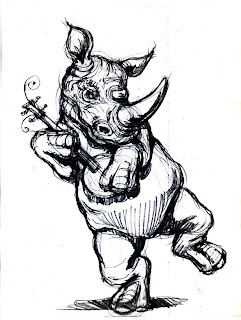
Image result for gospel singing rhino caricature
First- unlike a lot of "praise team instrumentalists," the singers knew how to play the guitar.


Second- you can hear the lyrics over the instruments and understand them without an interpreter.

Third- The melody is technically easy and recognizable (probably because there really is a melody).

Fourth- The lyrics are wholesome.

Fifth and most importantly- I like the song for its doctrinal soundness and its solid, conservative message about the immutable nature of TRUTH.

“All Truth is God’s Truth.”  And, the truth never changes because God is Truth and He never changes.  Jesus claimed that attribute to Himself when He said, “I am the Truth.” 

The songwriter begins by declaring that there is only one real religion.  That’s because there is only One true God and only one true way to salvation.  And God revealed that way through His Son, Jesus Christ who said, “I am the Way, the Truth, and the Life.”

The song goes on with a warning; we must be careful discerners of truth because there are many false teachers and prophets.  They stand behind pulpits, twist scripture, and speak beautiful words.  They will tell us that God didn’t really mean what the Bible tells us.  Those false preachers are snakes just like that serpent in the Garden and they will lead their followers to destruction.

Lots of people try to fit God into their own molds and practice religions that make them feel good.  But the One and Only True, Unchanging God has ordained an unchanging Gospel that still saves sinners today the same way He saved sinners in the past; by God’s grace through faith in Jesus Christ alone.   

 
You can hear it as originally recorded by Stuart Hamblen, on this video clip. I have reprinted the lyrics below:


MY RELIGION'S NOT OLD FASHIONED


There is but one real religion that redeems the sinners soul.
It's as timeless as the ages and it never will grow old.
My Lord gave the key to Thomas, "I'm the Way, the Truth, the Life,"
And that Way has never changed since He spoke the Words that night.


In this world of wild confusion, we are often led astray,
When we hear the words 'old fashioned' as men speak of God today.
My Lord doesn't deal in fashion, He's more timeless than the seas
And His Words still hold the power as they did in Galilee.


Some are prone to take the Bible and dilute the Words of Christ.
They admit He came here one time but He'll never make it twice.
Be not tempted by those "prophets" - He said such men would arise;
There is darkness in their teaching but there's life in Jesus Christ.


chorus
My religion's not old-fashioned but it's real genuine.
Two and two make four today as it did in my Lord's time.
Modern days don't make a difference you can't alter truth or time.
My religion's not old-fashioned but it's real genuine.

Sunday, December 16, 2018

****HOW DEEP THE FATHER'S LOVE FOR US

Stuart Townend is an English Christian composer who has written several modern worship songs.

In 2005, Cross Rhythms Magazine described Townend as "one of the most significant songwriters in the whole international Christian music field.”

Townend has been disturbed by the modern worship music movement that, he says, is characterized by its attempts to create an emotional “experience.”  He believes that emotion is an important part of worship, but it becomes problematic when the experience becomes the primary focus.

In a commentary posted on Crosswalk.com, A Christian website, they wrote, "the uniqueness of Townend’s writing lies partly in its lyrical content. There is both a theological depth and poetic expression that some say is rare in today’s worship writing."

Townend explained in an interview, “The danger, now, is that when we are so focused on the experience, our worship can become self-seeking and self-serving.  When all our songs are about how we feel and what we need, we’re missing the point. There is a wonderful, omnipotent God who deserves our highest praise, and how we feel about it is, in many ways, irrelevant!  I want to encourage the expression of joy, passion, and adoration, but I want those to be the by-product of focusing on God – I don’t want them to become the subject matter.  I’m trying to write songs that refer to us as little as possible, and to Him as much as possible!”

Many people are surprised to learn that Townend’s God-centered hymns are contemporary because they sound more like classic hymns than modern praise songs.

On his own webpage, Townend noted that he had been meditating about what it cost the Father to give up His beloved Son to such a torturous death on the cross.  And then he was convicted by his own part in that horrible event.  That’s when he penned the line, “It was my sin that nailed Him there.”  That was the beginning of the hymn, HOW DEEP THE FATHER’S LOVE.”

The hymn’s three simple verses express the basics of our Christian faith.  Verse one causes us to consider the greatness and the depth of our Father’s love expressed in His giving His only Son.  So, we celebrate His birth.  But then verse two directs our attention to Calvary.  Christ suffered and died on the cross for our sin.
 

The last verse of the hymn reminds us of our helpless condition; there is nothing good enough in us to merit God’s forgiveness; we need a Savior.  So, the song ends with these great words of assurance, “But this I know with all my heart: His wounds have paid my ransom.”

Sunday, April 29, 2018

****NOW I BELONG TO JESUS

NORMAN CLAYTON was born in 1903 and died in 1992.

During his childhood, he learned to play the pump organ and the trumpet which he played in churches for over 50 years.  In his early adult years, he worked at various occupations including dairy farming, office help, construction work and, during the depression, he worked in a bakery.

It was in the early 1940s that Jack Wyrtzen recruited Norman to be the organist for his ‘Word of Life’ rallies.  Norman proved to be very helpful to Jack in several different ministry functions for about 15 years. 

When Word of Life publishing merged with the Rodeheaver business he joined them as a writer and editor.  During those years he published about 30 songbooks containing several hundred of his own hymns. 

One observation, from those who knew him well, was that Norman made a lifelong practice of memorizing Scripture.  It was said of him, that whenever he began to write a new hymn, he studied the Bible to ensure that each phrase, in his songs, was biblical and doctrinally correct. 

In his song, NOW I BELONG TO JESUS, Clayton is clear about our sin nature.  In the second and third verses he speaks of sin’s degradation, it’s sorrow and shame, and the enslavement and control it has over each of us.  But the text also proclaims the Good News, “He gave His life to ransom my soul, now I belong to Him.”

Even though there is very little information available about Norman Clayton, there is a moving anecdotal story about this hymn.  It was told by Lindsay Terry, in his book, ‘Stories Behind Popular Songs and Hymns.’

A missionary, Roy Gustafson, was once invited to preach at a prison in Jamaica.  He sang and preached the gospel to a thousand men that day.  After the service, he met with a small group of condemned prisoners who were to be hanged from the gallows in a couple days.

Roy started with his own testimony and then sang Norman Clayton’s song, NOW I BELONG TO JESUS. One of the men, a wicked, condemned killer, said, “I’m going to die on Tuesday morning, sir.  Can I be saved?”

Roy opened his Bible and read and explained several passages from the Word of God including Romans 3. “All have sinned and fall short of the glory of God.”  …being justified freely by His grace through the redemption that is in Christ  whom God set forth as a propitiation by His blood, through faith, to demonstrate His righteousness, because in His forbearance God had passed over the sins that were previously committed, that He might be just and the justifier of the one who has faith in Jesus.”

The prisoner bowed his face to the dirt floor sobbing and called on the Lord to save him. Then, smiling through his tears, he asked Roy to sing the song again.  And with a little help, he began to sing along.  

When the guard returned to let the evangelist out of the prison, he looked back and saw the man still singing, “Now I belong to Jesus, Jesus belongs to me, Not for the years of time alone, But for eternity.”

Sunday, April 8, 2018

****AT THE CROSS

Throughout most of church history, some musicians have attempted to revive old hymns, make a few alterations, and reintroduce them to a new generation.
 
Sometimes writers make legitimate changes to correct doctrine or to clarify language difficulties.  And sometimes authors will add other stanzas that greatly improve the hymns.
  
That practice, however, is not without due criticism because sometimes those altered hymns border on plagiarism.

Probably the most notable hymn pirate today is Chris Tomlin who has earned an unseemly reputation by taking great hymns, changing the score, adding a refrain, renaming them, and then copyrighting them as his own creations.

But not all hymn changes are the result of piracy.
 
AT THE CROSS is one of those hybrid hymns.  It was originally written, without a refrain, in 1707 by Isaac Watts with the title, “Alas! And Did My Savior Bleed?”

In 1885, Ralph Hudson republished it, complete and intact, with his added refrain and the new title, AT THE CROSS.  In every hymnbook, the lyrics are still attributed to Isaac Watts.

Nevertheless, there are plenty of critics who complain that the added refrain breaks the serious mood of Watts’ hymn.
 
But I would argue that the structure of this altered hymn is similar to the structure of Christ Arose.  It starts with a dark and somber feel because Jesus was crucified and buried.  But then, suddenly, the song explodes in joyful gladness because He is alive.

AT THE CROSS begins with Isaac Watts’ vivid picture of the crucifixion of Christ at Calvary and the seriousness of our sin.  It is not uncomfortable for most people to think or talk about the crucifixion in universal and impersonal terms (eg. “Jesus died on the cross for the sins of the world”).  It is much more difficult when it is personalized.  The lyrics of this hymn are deliberately painful and designed to convict us.

When I think about that cross, I see the Son of God who was crucified for me.   He took the humiliation and shame of being stripped naked and paraded through the mocking crowds; He endured the beatings and scourging that tore His flesh to shreds and laid it open to expose His bones.  He is the One who was forsaken by His Father.  And He did all that for me.
   
The truth is, there is nothing good in me.  I can do NOTHING to merit God’s mercy and grace. So, in the last stanza, Isaac Watts concedes, “Drops of grief can never repay the debt of love I owe.”

It grieves me that I stand here, alive, knowing that His punishment should have been mine.  I deserved that death sentence.

I love Watts' hymn but I praise God for the message of Ralph Hudson’s added refrain.  It proclaims our hope.  The Light of God has penetrated our hearts.  Because of Calvary, the burdens of our sin and guilt are gone.


“For by grace you have been saved through faith, and THAT not of yourselves; it is the gift of God, not of works, lest anyone should boast.”  (Eph. 2.8-9)  


(My other commentaries on Watts' hymn, "Alas!  And Did My Savior Die? can be seen here, here, and here.)

Sunday, February 4, 2018

****IMMORTAL, INVISIBLE, GOD ONLY WISE (1)

In the late 1970s, the deacons in an evangelical Baptist church called a meeting with their pastor.   Deacon John was accusing the pastor of teaching false doctrines about the nature of God. 

In the meeting, John unloaded his complaint - “Pastor, I just can’t believe what you are saying!  You are telling me that God’s plans cannot be thwarted and that He controls all the events of human history for His own purposes--is that fair?  I’ve always thought of God as a gentleman, the kind of fellow that presents His case to you, and lets you work things out.  He lets human beings work out the world their own way, except when He decides to intervene in some special case.”

Pastor Bob asked him, “Where do you find that in the Bible, John?  God never claims to be fair--only just.   Fairness is a human standard that changes as often as our perceptions change--But God never changes, and His decrees are never altered.  God is not, and cannot be, judged by any standard established by men!”
 
He opened his Bible and read about God’s ruling the affairs of nations, and His plan for redemption through the sacrifice of the Cross.  Then he looked at John and asked, “Was it fair for God to send His Son to die for us?  Did God ever promise to take our thoughts, whims, and petty human pride into account in His eternal councils?  No! John, God is either absolute, or He is not God!”

John stood up, walked to the door, and said, “You and I don’t worship the same God.”


After that, John would not answer his pastor’s phone calls and he never returned to the church again.  Instead, he moved his family to a liberal church across town.

This is not unique; it happens too often.  Not long ago I asked my friend, "Do you believe that God is Sovereign?"  

He answered, "Yes!"  

Then I asked, "Is He sovereign over all things?" 

And again, he answered, "Of Course."  

One more time I asked, "Do you believe He is sovereign in salvation?"  

This time he answered, "Well, He is to an extent." 

To an extent? -- in other words, my friend thinks there is a limit to God's sovereignty.  But if God is not sovereign in all, He is not sovereign at all.

Deacon John was like a lot of people, including my friend; they have unbiblical concepts of God.  And they have created a false god who thinks and acts the way they imagine a god should act.
 
We can know nothing about God, except that which He has revealed to us in Scripture.   If the god you worship is less than, or different from the One true God of the Bible, then your god is one that you have created in your own imagination. 

In our Wednesday Bible studies, we have been looking at some very difficult and astonishing truths about the attributes or character traits of our God.    I would think it’s probable that God is infinitely more than the total of His revealed attributes but, certainly, He is nothing less. 

IMMORTAL, INVISIBLE, GOD ONLY WISE was written by Walter Smith who, in the late 1800s, pastored the Free Church of Scotland for forty-four years.
  
The opening line is a paraphrase of 1Tim. 1:17, “Now to the King eternal, immortal, invisible, to God who alone is wise, be honour and glory forever and ever.  Amen.”


In rapid succession, Smith identifies at least 23 of God’s character traits.  The original hymn had five stanzas but, in most hymnbooks, the last two have been carefully combined and what we have today, is an amazing hymn of reverential praise to the greatness of our God. 

Sunday, January 7, 2018

****ROCK OF AGES

Psalm 73 is a plea to God for protection. In it, David uses the metaphor of a rock to describe God’s ability to protect him from the evil deeds of his enemies.
  
Be my STRONG REFUGE, For You are my ROCK and my FORTRESS.  Deliver me, O my God, out of the hand of the wicked, Out of the hand of the unrighteous and cruel man.  Let my enemies, who seek to harm me, be confounded and consumed.  
The metaphor is applied to God several other places in scripture.  It speaks of His strength and ability to rescue, protect and keep His people.  In Psalm 18:2, the Psalmist says, “The Lord is my ROCK and my FORTRESS and my deliverer; My God, my STRENGTH, in whom I will trust; My SHIELD and the horn of my salvation, my STRONGHOLD.” 


And Isaiah says, “the LORD God is an everlasting ROCK” (Isa 26:4).

So, God is pictured as a strong stone fort where we are safe from harm. We need the Lord’s protection from both human and demonic enemies.  

But more than that, we should never forget that we come into this world as sinners and enemies of God.  We need Him to protect us from Himself. And the only way to escape the wrath of His righteous justice is to find shelter in the Only One who can save us, the Rock of our Salvation; Jesus Christ alone. 

That is the metaphor Augustus Toplady used in his hymn, ROCK OF AGES.   In the first line, he personifies this cleft Rock; it is Jesus Christ.  

The word “cleft” is a noun that means a split or opening made by striking or cutting.  The allusion reminds us of the day when Moses asked the LORD to show him His glory.   But God said, “You cannot see My face; for no man shall see Me, and live.”   “Here is a place by Me, and you shall stand on the ROCK.  So, it shall be, while My glory passes by, that I will put you in THE CLEFT OF THE ROCK, and (I) will cover you with My hand while I pass by.   Then I will take away My hand, and you shall see My back, but My face shall not be seen.”  (Ex 33:20-23). 

Did you see that?  Salvation is a work of the Lord.  It was God who put Moses in the Rock.  

And how is it that this Rock, Christ Jesus, is a cleft rock?   

We are reminded of how, after God saved His people and miraculously led them out of bondage, destroyed their enemies, and provided everything they needed in the wilderness, the people began whining and complaining that they were going to die of thirst.  So, the Lord told Moses to strike the ROCK with his staff and the water flowed out from the cleft of the ROCK.

That was a picture of the work of Christ at Calvary where Jesus, our Rock of salvation, was “smitten, stricken, and afflicted” by the LORD, “pierced for our transgressions… crushed for our iniquities” (Isa 53:4-5).

And from His side flowed His “precious blood” that cleanses our sins  (1 Pet 1:19), mixed with water “welling up into eternal life” (Jn 4:13-14).

Toplady’s hymn, ROCK OF AGES, is the prayer of a desperate man. In the second half of the first stanza, he continues his pleading with God, to wash him with the water and blood that flowed from Jesus’ side because, "without the shedding of blood, there is no remission for sin." 

And then he goes on to admit that he is completely helpless; If God doesn’t save him, he will die. He has nothing of value or virtue; no goodness, and no merit.  All he can do is beg for God’s mercy and trust in His grace.   


Another commentary on this hymn can be seen HERE.   

Sunday, December 24, 2017

****ONE DAY (GLORIOUS DAY)

The hymn, ONE DAY was written by Dr. J. Wilbur Chapman.  While he was a guest preacher at a Bible Conference around 1908, He handed the text to his organist, Charles Marsh, who composed the tune.  Chapman published it in 1910.

This is one of those songs that appear in many hymnbooks but, for some reason, always seems to be there just to take up space.  I don’t know why it is not one of our more prominent hymns.  Maybe it’s because of how it’s placed in the topical index.  It’s not categorized as a Christmas song, although the first stanza tells of Christ’s incarnation.  And neither is it listed as a resurrection hymn, although it sings of His death, burial, and resurrection.  It is just placed somewhere in the category, “The Life of Christ.”

ONE DAY is a hymn that recounts the glorious days in God’s story of redemption; the day of Christ’s birth, the day of His crucifixion, the day of His death and burial, and the day of His resurrection. 

The good news is that Chapman’s lyrics are making a comeback in a popular, new version titled, GLORIOUS DAY.  It was produced with a new music score, by Mark Hall and Michael Bleeker of Casting Crowns.  Except for the addition of a few lines, the original lyrics remain intact.

However, the new rendition has already generated some unfair criticism, mainly about the refrain:
“Living He loved me, dying He saved me, buried He carried my sins far away; Rising He justified freely forever; One day He’s coming, O glorious day.”
 
The critic’s objection is that Jesus’ living doesn’t equate to His loving; His death didn’t save us, our sins were not carried far away by His burial, and His resurrection did not justify us.

But the arguments are foolish.  It is not hard to understand that the author’s intention was to recap the full scope and purpose of Christ’s ministry; His incarnation and perfect sinless life, His crucifixion, His death, burial and resurrection, and His Second coming, as an all-inclusive, once for all, completed work of God’s redemptive grace.

In fact, it reads like a poetic paraphrase of these words in Paul’s, summary statement of the Good News of the Gospel: “Moreover, brethren, I declare to you the gospel which I preached to you, that Christ died for our sins according to the Scriptures, and that He was buried, and that He rose again the third day according to the Scriptures.”

This hymn is rich in sound doctrine and packed full of allusions to Scripture.  One researcher broke it down and identified multiple scriptural referenced for almost every phrase.  He found over 75 supporting texts for this hymn.

Some of the more overt theological themes in this song include the doctrines of angels, sin, the virgin birth, the incarnation, atonement, propitiation, justification, redemption, resurrection, ascension,  and second coming. 

The song ends with a glorious proclamation of our hope.

ONE DAY the trumpet will sound for His coming.
One day the skies with His glories will shine;
Wonderful day, my Beloved One’s bringing;
Glorious Savior, this Jesus is mine.

One day He’s coming, O GLORIOUS DAY!

Monday, December 18, 2017

****THOU DIDST LEAVE THY THRONE

THOU DIDST LEAVE THY THRONE was written by Emily (Elizabeth Steele) Elliott in the late 1800s.  She was the daughter of Charlotte Elliot who wrote, “Just As I Am.”

Emily had a passion for her work in rescue missions and teaching Sunday school, and she saw those occupations as opportunities to reach children with the gospel.

For six years, she edited a missionary publication for children’s ministries, in which she published a collection of 48 of her hymns.

But THOU DIDST LEAVE THY THRONE was different; it was printed separately and written exclusively for the children’s choir in her father’s parish in Brighton, England.  She wrote this hymn to clarify the meaning, of Advent and the Birth of Jesus, to the children she taught, and there are some great doctrinal truths to be discovered in it.

The text is based on Luke 2:7, “And (Mary) brought forth her firstborn son, and wrapped Him in swaddling clothes, and laid Him in a manger; because there was no room for them in the inn.”

In the structure of this hymn, Emily used a literary technique called rhetorical antithesis.  Two observations, in each verse, are intentionally contrasted to emphasize the difference.  And each contrast hinges on the same conjunction, “BUT.”

In the first stanza, Jesus left His glorious heavenly home, BUT there was no room for Him in Bethlehem.

In the second, He is described as the King surrounded by angels always singing His praises, BUT His birth on earth was lowly and humble.

Verse three is a poetic paraphrase of Matthew 8:20 “Foxes have holes and birds of the air have nests, BUT the Son of Man has nowhere to lay His head.”

And in the fourth verse, He came from heaven bringing words of love and life BUT, on earth, He was mocked and scorned.

A similar contrast is implied in the refrain; there was no room for Him in the Inn, BUT there is room for Him in the hearts of believers. 

  The song is sometimes used as an invitation hymn because of the last phrase in each of the first four stanzas, “O come to my heart, Lord Jesus, there is room in my heart for Thee.”

But that usage misses the point.

This is not a hymn of invitation for sinners to come to the Savior; it emphasizes the reality that we have NOTHING big enough, grand enough, valuable enough, or good enough to offer that would impress God and merit His good grace and favor.  All we can do is come broken and needy and offer Him our hearts.

But, should God be pleased with that?

Well, frankly, I can’t think of anything dirtier; not even that filthy stable.  The words of Jeremiah the prophet, remind me what God thinks of my heart:

“The heart is deceitful above all things, and desperately wicked;
Who can know it?

"I, the Lord, search the heart, I test the mind, even to give every man according to his ways, according to the fruit of his doings.” (Jer. 17:9-10)

Nevertheless, the Spirit of God indwells His people anyway.  He has given us a new heart and while we are still in these sin-sick bodies, He is at work cleaning us and making us fit to live with Him.
  The point is, we have nothing to boast; ALL the glory for our sanctification belongs to Him.

The final stanza proclaims our Hope.  We are looking forward to that day when He will call us home to dwell with Him forever. 

Sunday, November 19, 2017

****ONCE FOR ALL (Free From The Law)

Some Christian music historians have ranked Philip Bliss as the second greatest Christian songwriter in history.  In just twelve years, he had written several hundred hymn lyrics and music scores including:
I Gave My Life For Thee
It Is Well With My Soul
Almost Persuaded
Hallelujah, What A Savior!
Hold The Fort
Jesus Loves Even Me
Let The Lower Lights Be Burning
The Light Of The World Is Jesus
Wonderful Words Of Life
and ONCE FOR ALL

Philip died in a tragic train wreck at the age of 38 but, had he lived, he probably would have passed his peers, Fannie Crosby, Charles Wesley and Ira Sankey, in terms of the sheer number of compositions produced.  And he wanted his works to be freely used and enjoyed by the Church so none of his songs were ever copyrighted.

For Christmas in 1871, his wife gave him a bound copy of English periodicals called “Things New and Old.”  One of the articles referenced Romans 8:1-2 “There is therefore now no condemnation to those who are in Christ Jesus, who do not walk according to the flesh, but according to the Spirit.  For the law of the Spirit of life in Christ Jesus has made me free from the law of sin and death.”

Another passage, in that piece, was Hebrews 10:10. …we have been sanctified through the offering of the body of Jesus Christ once for all.”
That article inspired Philip to write the hymn, ONCE FOR ALL (sometimes titled Free from The Law).

There is a lot of confusion about this subject and many people have perverted the doctrine of God’s grace, to imply that, once we are saved, we have the freedom to do whatever we want with no fear of His condemnation or wrath.

So, what does it mean to be “free from the law?”

The Law is a strict prison master; It is consequential and unmerciful.  It is impossible to keep, and any infraction requires a death penalty.  That’s the environment we live in when we think that we can merit God’s favor by our own good works.  But God is merciful and has provided His free gift of undeserved grace for all who would believe. 

That is the Gospel; Jesus suffered, bled, and died so that anyone whose faith is in Christ alone, is free from the grip and the penalty of the Law.   There is no more sacrifice for sin; the penalty has been paid. 

Paul wrote to the Christians at Rome, “…for you are not under law but under grace.”  But that doesn’t mean that we can go on ignoring His revealed laws or that we can live according to our own desires.  Paul’s words are prefaced by the phrase, “… For sin shall NOT have dominion over you…”

Freedom from the Law also means that, after He saves us, His Spirit lives in us and He gives us the power to resist sin, obey Him, and serve Him.          


Christ has redeemed us ONCE FOR ALL. 

Sunday, October 1, 2017

****TRUST AND OBEY

In my commentary last week, about the hymn, TRUSTING JESUS, I pointed out the necessity of trusting completely in Jesus Christ alone for our salvation.  There is nothing we can do to earn or merit God’s grace.   Jesus paid it all.  Ours is to repent and believe.

Throughout Church history, there have been many who have distorted that Doctrine of salvation by Grace Alone, in ways that are destructive and heretical.  The official word for the heresy is antinomianism which is literally translated, “against law.”  That is the teaching that says, “We are now in an age of grace and are no longer under the law.”

You might recognize some other names for the heresy such as ”Easy Believism,” or  “Free Grace.”  It’s the practice of encouraging people to repeat a simple, anemic, unrepentant prayer to ask Jesus into their lives and then convince them that they are saved and safe and eternally secure when there has been no real new birth.   

It is offensive to the Gospel and destructive to people when we allow them to believe that they can be positionally right with God while continuing in their sins without consequence; that Jesus paid the penalty for all their sins without telling them that God expects them to stop sinning.

I’m sure you have heard many variations of that, especially today, when so many churches, in the name of political correctness or tolerance, are welcoming and celebrating all kinds of gross unrepentant immorality into their memberships because, “after all, that’s the way God created them and who are we to judge?”

One man, I know, after leaving his wife and shacking up with another woman, said to me, “I don’t care, I accepted Jesus into my heart when I prayed that prayer and I know I’m going to heaven anyway so it doesn’t matter what I do.”

So I need to make a statement, here, which may seem like a paradox.   "While it is true that no one will ever get to heaven by their good works, it is also true that no one will get to heaven without them."

One night at a D. L. Moody evangelistic meeting a young man stood up to testify about the uncertainty of his salvation.  He said, “I am not quite sure, but I’m going to trust, and I’m going to obey.”

That statement was the inspiration for the hymn, TRUST AND OBEY.  It emphasizes two aspects of our salvation—first, our faith and then, our willingness to subject ourselves to God’s Word in obedience. 

“For we are His workmanship, created in Christ Jesus unto good works, which God hath before ordained that we should walk in them.”  Eph 2:10

That’s what we were redeemed for; to walk in good works.   Salvation is just the beginning.  When God saves us, He begins the process of cleansing us and making us fit to live with Him forever.  With the Word of God and the indwelling Spirit of God to convict us, we begin to see ourselves as God sees us.  If our sins don’t bother us; if we are not changed, and if we are not turned from our old ways to walk in obedience to Him, then there is a good reason to question the reality of our salvation.

“TRUST AND OBEY, for there’s no other way to be happy in Jesus, But to TRUST AND OBEY.”


Sunday, September 10, 2017

****THANKS TO GOD WHOSE WORD WAS SPOKEN (2)

In a sermon he preached, about a year ago, my pastor summarized all biblical theology in two statements:

1.     GOD IS.  That fact is declared in the first four words of the Bible (Genesis 1:1) “In the beginning GOD…”

2.     HE HAS REVEALED HIMSELF.  And that is the rest of the Bible in its entirety.  It’s all about Him.  It’s His revelation of and about Himself to His creation.  Everything we need to know for faith and practice, He has revealed in His written Word.


Can you imagine what it would be like if it were left up to each one of us to discover God through subjective means?  We could never be certain.  But we have His Word.  It is true and it is certain.  The Word of God is our final authority in all matters of faith and practice. 

THANKS TO GOD WHOSE WORD WAS SPOKEN, is a song of thanksgiving to God for His Word.  He has given us everything we need to know about Him.  And He has done it with WORDS.

I was fascinated by the way the author, R. T. Brooks, outlined God’s progressive revelation in the four stanzas of this hymn.  But then,  I was bothered by how he ended each verse with the same phrase; “Praise Him for His OPEN word.”  

In the context of 21st century American Christianity, that word raises a lot of confusion. We have open theism, open marriages, open doctrines, and churches with open memberships.  God’s Word should be open but it is NOT open to interpretation; it means exactly what He intended it to mean.  We are not to approach His Word with the question, “What does this verse mean to me?” but rather, “What did God mean when He spoke it and what does it mean if I had never been born?"

So, I have taken the liberty to change the last phrase in each verse, in order to more clearly identify the mode through which God has Spoken (see lyrics below). 


The first stanza describes the beginning of God’s revelation in His creation (“the deed that made the earth”).  Gen. 1;1 says, “In the beginning, God created the Heavens and the Earth.”  Then, in subsequent verses, we read that in every act of His creation, prior to man, He created with His Spoken Word (“…and God said, ‘Let there be…’ ”)    All creation is an unmistakable testimony of God’s glory. 

The concept that God has spoken in His creation is further expounded in Psalm 19, “The heavens declare the glory of God; And the firmament shows His handiwork.  Day unto day utters speech, And night unto night reveals knowledge. There is no speech nor language Where their voice is not heard. Their line has gone out through all the earth, And their words to the end of the world.”

The stanza continues with God calling His people.  Hebrews 1:1 says, “God, who at various times and in various ways spoke in time past to the fathers by the prophets…” 

That verse is clear, God spoke IN TIME PAST.   And He was precise and deliberate to ensure that His Word was not changed or corrupted.  If any man claimed to be a prophet, and his prophecies did not come to pass, he was executed so that there would be no confusion among God’s people.  

We Praise Him for His SPOKEN Word.


The second stanza is a reference to verse 2 of Hebrews 1, “…(God) has, in these last days spoken to us by His Son.”

John introduced the Son of God with these words, “In the beginning was the Word, and the Word was with God and the Word was God.  And the Word became flesh and dwelt among us.  And we beheld His Glory, the glory as of the only begotten of the Father, full of grace and truth.

Then, in verse 17, John makes this distinction between the Word of prophecy and the Incarnate Word;  “For the law was given through Moses, but grace and truth came through Jesus Christ.”

We Praise Him for the LIVING Word.


The third stanza takes us to the Scriptures which were given to us by God through the Apostles.  (2 Tim. 3:16-17) “All Scripture is given by inspiration of God, and is profitable for doctrine, for reproof, for correction, for instruction in righteousness, that the man of God may be complete, thoroughly equipped for every good work.”

Now we have His complete Word recorded for us. 

We Praise Him for His WRITTEN Word.


Does God still speak to us today?  Yes!

The last stanza tells us that the Spirit speaks to us. 

One of the functions of the indwelling Spirit of God is to teach us and guide us into all Truth.  And He does that with His Word because “His Word is Truth.”  

When we hear or read and meditate on God's Word, the Spirit convicts us of sin and leads us in the way we should live.  And any time we feel that the Holy Spirit is telling us something, it must be tested against or verified with the Written Word of God.  God’s Word never changes and it never contradicts itself because God never changes.

Praise Him for His CHANGELESS Word.


THANKS TO GOD WHOSE WORD WAS SPOKEN

Thanks to God whose Word was spoken,
In the deed that made the earth.
His, the voice that called a nation,
His the fires that tried her worth,
God has spoken, God has spoken;
Praise Him for His open SPOKEN Word.

Thanks to God whose Word incarnate,
Glorified the flesh of man.
Deeds and words and death and rising,
Tell the grace in heaven’s plan.
God has spoken, God has spoken;
Praise Him for His open LIVING Word.

Thanks to God whose Word was written,
In the Bible’s sacred page.
Record of the revelation
Showing God to every age.
God has spoken, God has spoken;
Praise Him for His open WRITTEN Word.

Thanks to God whose Word is answered,
By the Spirit’s voice within.
Here we drink of joy unmeasured,
Life redeemed from death and sin.
God is speaking, God is speaking.
Praise Him for His open CHANGELESS Word.